
How to Introduce Yourself in English Online
Introducing yourself in English online can feel simple, but many learners get stuck at the first message. They want to start a conversation, but they are not sure what to say, how much information to include, or how to sound natural.
This is especially common when talking to a new language partner. You may worry about making mistakes, sounding too formal, or not receiving a reply.
The good news is that your introduction does not need to be perfect. It only needs to be clear, friendly, and easy to answer.
A good introduction helps the other person understand who you are, what language you are learning, what kind of practice you want, and why starting a conversation with you could be interesting.
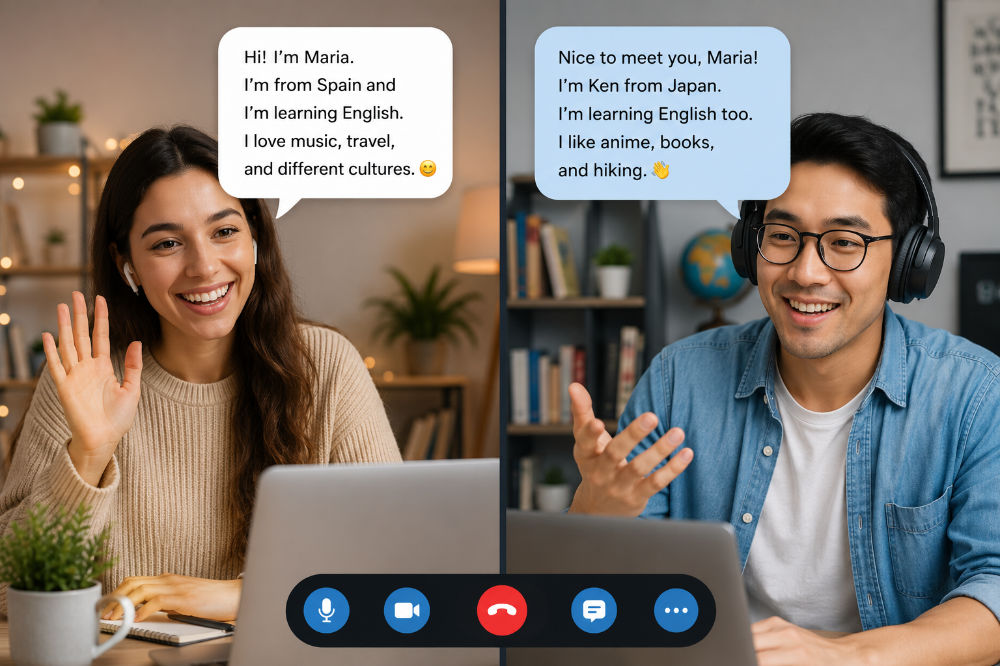
Why your introduction matters
Your introduction is the first impression you give to another person. In online language exchange, this first message can decide whether the conversation continues or stops immediately.
Many learners send a very short message like:
“Hi”
or:
“Hello, how are you?”
These messages are not wrong, but they do not give the other person much to answer. They are too general and can easily be ignored, especially if the other person receives many similar messages.
A stronger introduction gives more context:
“Hi, my name is Ana. I’m from Brazil and I’m learning English because I want to feel more confident when speaking with people from other countries.”
This message works better because it tells the other person who you are, where you are from, and why you are learning English.
A good introduction can help you:
- Receive more replies
- Start more natural conversations
- Find people with similar interests
- Make your learning goal clear
- Avoid awkward or empty conversations
When you introduce yourself well, you make it easier for the other person to reply with something meaningful.
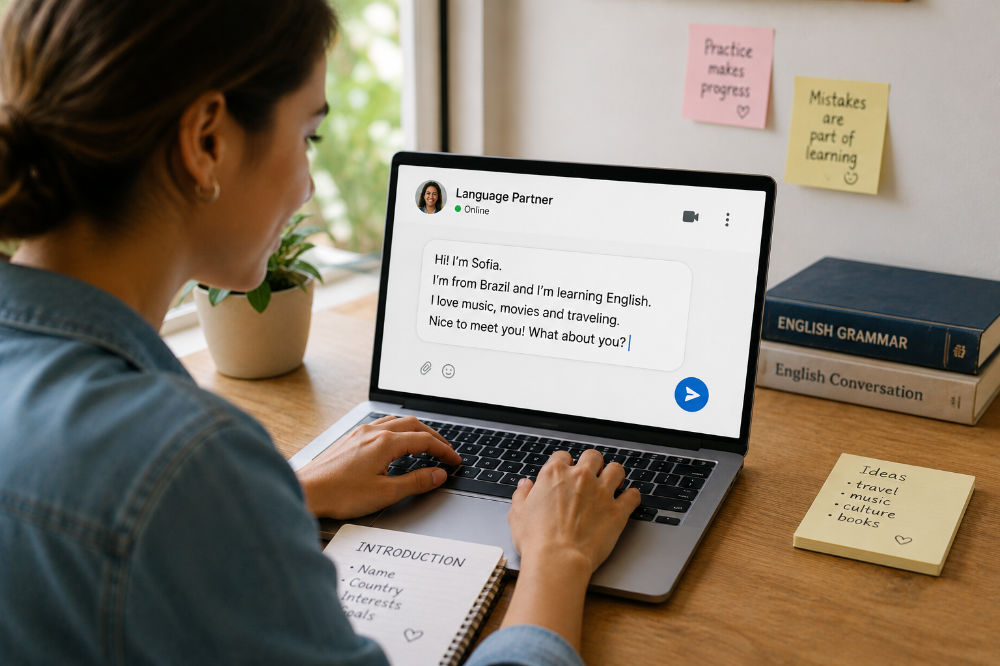
Keep it simple and natural
A good introduction does not need to be long. In fact, a very long first message can feel heavy or difficult to answer.
The best introduction is usually short, friendly, and clear.
You can follow this simple structure:
Name + country + language goal + interest + simple question
For example:
“Hi, I’m Lucas from Brazil. I’m learning English to improve my speaking confidence. I like movies, music, and traveling. What kind of topics do you enjoy talking about?”
This introduction works because it gives the other person several ways to reply. They can ask about Brazil, talk about movies, mention travel, or answer the question at the end.
You do not need to use difficult words to sound fluent. Natural English is often simple English used clearly.
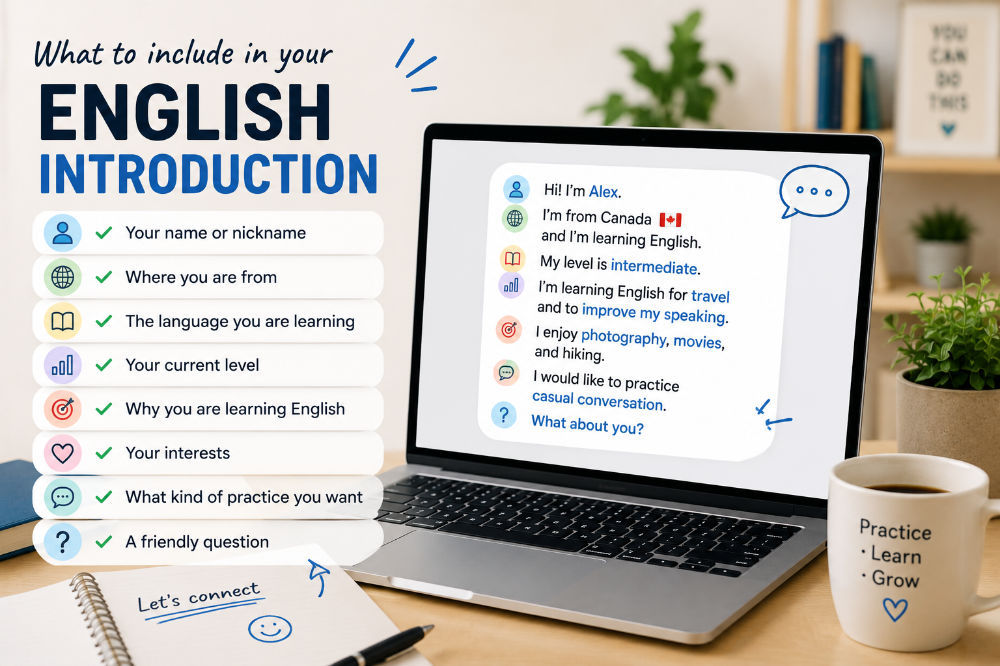
What to include in your introduction
When you introduce yourself online, you do not need to share everything about your life. The goal is only to give enough information to start a conversation.
A good online introduction may include:
- Your name or nickname
- Where you are from
- The language you are learning
- Your current language level
- Why you are learning English
- Your interests
- What kind of practice you want
- A friendly question
Example:
“Hi, I’m Mariana. I’m from Portugal and I’m learning English for work and travel. My level is intermediate, and I would like to practice casual conversation. I enjoy books, food, and learning about different cultures. What are you learning at the moment?”
This kind of introduction feels complete without being too long. It also makes the conversation easier because the other person has many possible topics to continue with.
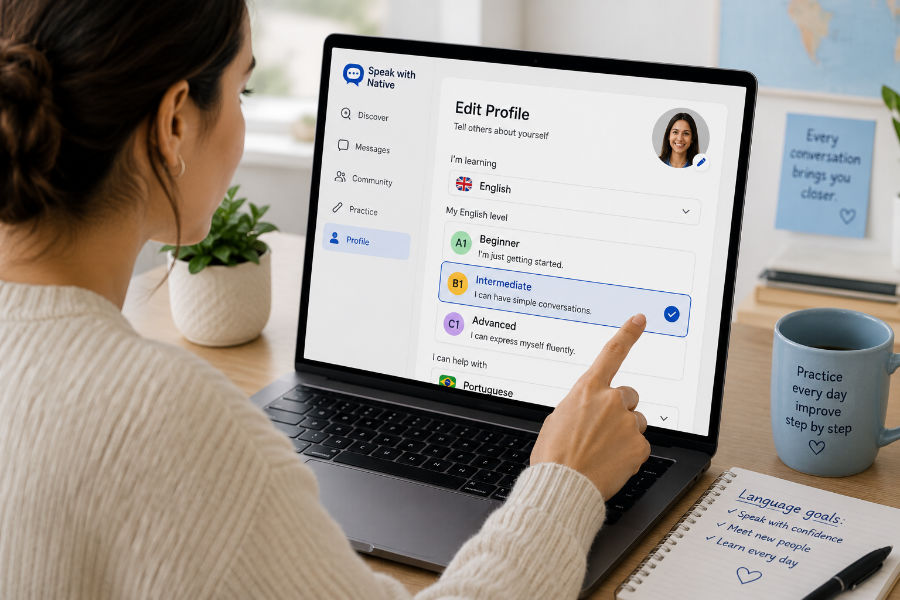
Mention your English level honestly
Many learners feel embarrassed about their English level. They may think they need to sound advanced before talking to someone. But this is not true.
Language exchange exists because people are learning. You do not need perfect English to introduce yourself.
It is better to be honest about your level, but try to say it in a positive way.
Instead of saying:
“Sorry, my English is terrible.”
You can say:
“I’m still learning, so I may make mistakes, but I’m excited to practice.”
Here are some natural ways to describe your level:
- “I’m still a beginner, but I’m trying to practice more.”
- “My English is intermediate, and I want to become more fluent in conversations.”
- “I understand English quite well, but I need more speaking practice.”
- “I can read and listen quite well, but I want to improve my confidence when speaking.”
Being honest helps the other person understand how to communicate with you. It also reduces pressure because you are not pretending to know more than you do.
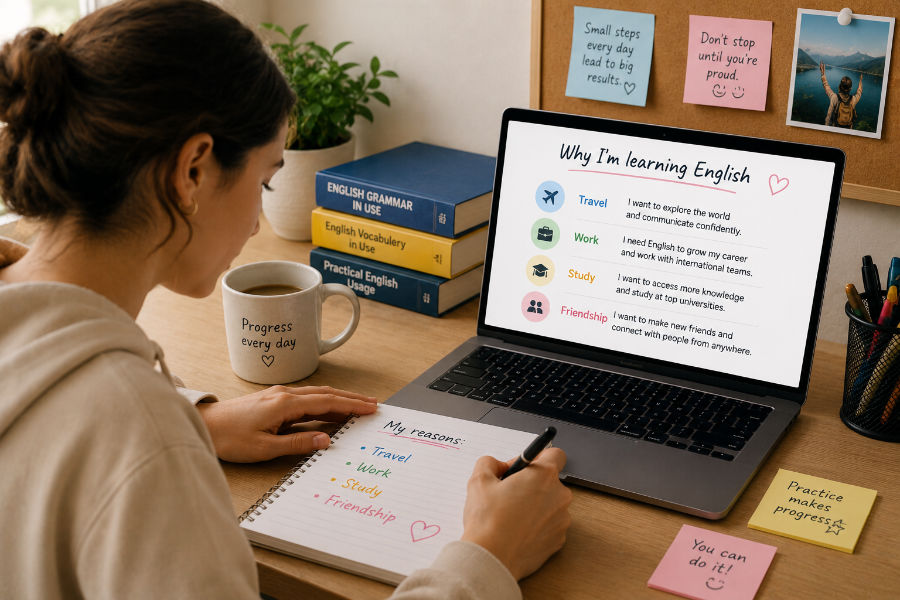
Say why you are learning English
Your reason for learning English makes your introduction more personal. It also helps you find people with similar goals.
For example, someone learning English for travel may enjoy different conversations than someone learning English for job interviews or academic study.
You may be learning English:
- For travel
- For work
- For study
- To make international friends
- To watch movies and series without subtitles
- To feel more confident speaking
- To prepare for interviews or exams
Examples:
“I’m learning English because I want to travel more and feel comfortable talking to people from different countries.”
“I’m learning English for my career. I work in technology and want to improve my communication with international teams.”
“I’m learning English because I want to make friends from other countries and have more natural conversations.”
When you explain your motivation, your message feels more human and easier to connect with.
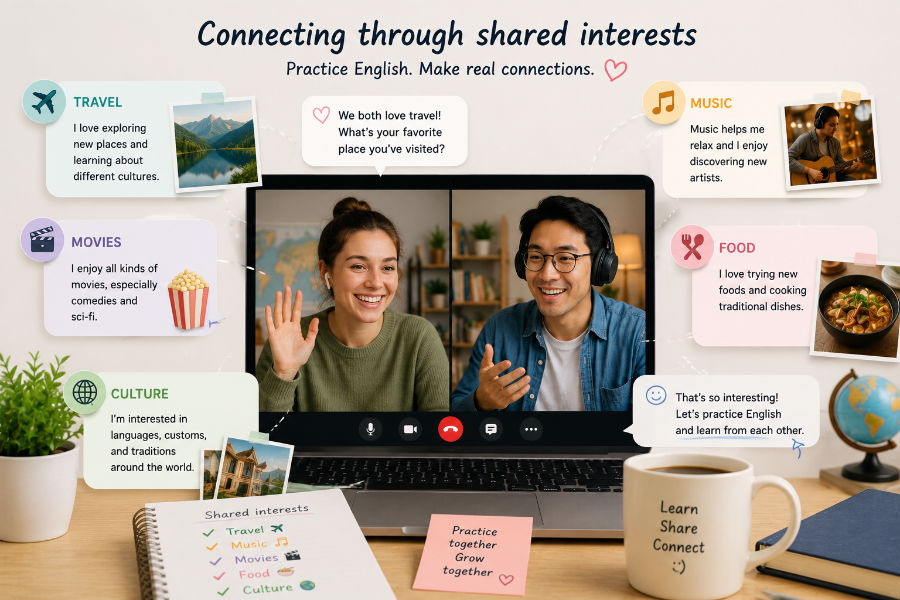
Add interests to make the conversation easier
Interests are one of the easiest ways to start a natural conversation. When you mention topics you enjoy, the other person can quickly find something to talk about.
Instead of writing only:
“I want to practice English.”
You can write:
“I want to practice English, and I enjoy talking about music, movies, technology, food, and travel.”
This gives the other person more options. They may reply with a favorite movie, a travel story, or a question about your country.
Good interests to mention include:
- Movies and series
- Music
- Travel
- Food
- Sports
- Fitness
- Books
- Technology
- Culture
- Daily life
On Speak with Native, interests can help you find people who are easier to talk to. If you and another person enjoy similar topics, the conversation usually feels more natural from the beginning.
Explain what kind of practice you want
Not every language learner wants the same kind of practice. Some people want casual conversation. Some want corrections. Some prefer text messages. Others want voice messages or video calls.
If you explain what you are looking for, you can avoid misunderstandings and find better language partners.
Useful phrases:
- “I would like to practice casual conversation.”
- “I’m looking for someone to exchange messages with in English.”
- “I would like to practice speaking and receive corrections when possible.”
- “I prefer relaxed conversations about daily life.”
- “I can help you with Portuguese, and I would like help with English.”
- “I would like to practice with voice messages because I want to improve my pronunciation.”
Example:
“I’m looking for someone to practice casual English conversation with. I would also be happy to receive corrections when I make mistakes.”
This kind of sentence is clear and respectful. It tells the other person what you need without sounding demanding.
End with an easy question
A good introduction should not only talk about yourself. It should also invite the other person to reply.
The easiest way to do this is to end your message with a simple question.
Good questions include:
- “What language are you learning?”
- “What topics do you like talking about?”
- “Why are you learning English?”
- “Would you like to practice together?”
- “Do you prefer text messages or voice messages?”
- “What do you usually do to practice languages?”
Example:
“What kind of topics do you enjoy talking about?”
This question is simple, friendly, and open. It allows the other person to choose a topic they like.
Avoid starting with questions that are too personal or too difficult. At the beginning, the goal is to make the conversation feel comfortable.
Examples of introductions for different levels
Your introduction can change depending on your English level. A beginner does not need the same style as an advanced learner.
Here are some examples you can adapt.
Beginner example:
“Hi, I’m Pedro. I’m from Brazil. I’m learning English and I’m still a beginner. I like music, football, and movies. I want to practice simple conversations. Nice to meet you!”
Intermediate example:
“Hi, my name is Sofia. I’m from Spain and I’m learning English to improve my speaking confidence. I’m interested in travel, food, culture, and daily life topics. I would like to practice casual conversation and learn more natural expressions. What topics do you like to talk about?”
Advanced example:
“Hi, I’m Daniel. I’m from Germany and I’m trying to make my English sound more natural and fluent. I’m especially interested in business, technology, culture, and international communication. I’d be happy to exchange ideas and help you with German if you’re learning it.”
These examples are different, but they all have the same purpose: they are clear, friendly, and easy to answer.
Examples for different goals
You can also adapt your introduction depending on your reason for learning English.
For travel:
“Hi, I’m Camila from Brazil. I’m learning English because I want to travel more and feel comfortable speaking abroad. I enjoy talking about food, culture, and places to visit. Are you also learning a language for travel?”
For work:
“Hi, I’m Rafael. I’m learning English for work because I often need to communicate with international clients. I would like to practice professional and casual conversations. What language are you learning?”
For friendship:
“Hi, I’m Julia. I’m from Italy and I’m learning English because I’d like to meet people from different countries. I enjoy movies, music, cooking, and talking about daily life. Nice to meet you!”
For pronunciation:
“Hi, I’m André. I’m learning English and I want to improve my pronunciation and speaking confidence. I’d like to practice with voice messages or short conversations. Would you like to practice together?”
These examples make your goal clear. This helps the other person understand what kind of exchange you are looking for.
What to avoid when introducing yourself
A good introduction is not only about what to say. It is also about what to avoid.
Try to avoid:
- Writing only “Hi”
- Sending a very long message
- Asking very personal questions immediately
- Apologizing too much for your English
- Sounding demanding
- Copying the same message to everyone without reading profiles
Examples to avoid:
“Hi”
“Teach me English.”
“My English is very bad, sorry, sorry, sorry.”
“Can you call me now?”
Better alternative:
“Hi, I saw that you’re learning Portuguese. I’m from Brazil and I’m learning English. Maybe we can help each other.”
This message is much better because it is polite, specific, and connected to the other person’s profile.
How to introduce yourself on Speak with Native
On Speak with Native, your introduction can be stronger when you use the information available in profiles.
Before sending a message, look at the other person’s profile and check:
- Which languages they speak
- Which languages they are learning
- Their language level
- Their interests
- Their location or country
- What kind of language exchange may be useful for both of you
Instead of sending the same message to everyone, you can write something more personal.
Example:
“Hi, I saw on your profile that you speak English and are learning Portuguese. I’m from Brazil and I’d be happy to help you practice Portuguese. I’m learning English and would like to practice casual conversation. Do you prefer text or voice messages?”
This message works well because it shows that you read the profile. It also explains how both people can help each other.
Speak with Native helps you start better conversations by showing useful information such as languages, interests, level, and location. This makes it easier to find people who match your learning goals.
Introduction templates users can copy
Here are some simple templates you can copy and adapt.
Simple template:
“Hi, I’m [name]. I’m from [country]. I’m learning English because [reason]. I like [interests]. Nice to meet you!”
Language exchange template:
“Hi, I’m [name] from [country]. I speak [your language] and I’m learning English. I saw that you’re learning [your language], so maybe we can help each other. What kind of practice are you looking for?”
Friendly conversation template:
“Hi, I’m [name]. I’m learning English and would like to practice casual conversation. I enjoy talking about [interest 1], [interest 2], and [interest 3]. What topics do you like?”
Correction-focused template:
“Hi, I’m [name]. I’m learning English and trying to improve my speaking and writing. I would be happy if you could correct me sometimes, and I can help you with [your language] too.”
Voice practice template:
“Hi, I’m [name]. I’m learning English and want to improve my pronunciation. I would like to practice with voice messages or short conversations. Would you like to practice together?”
Templates are useful, but you should adapt them to your real situation. A personal message usually feels better than a copied message.
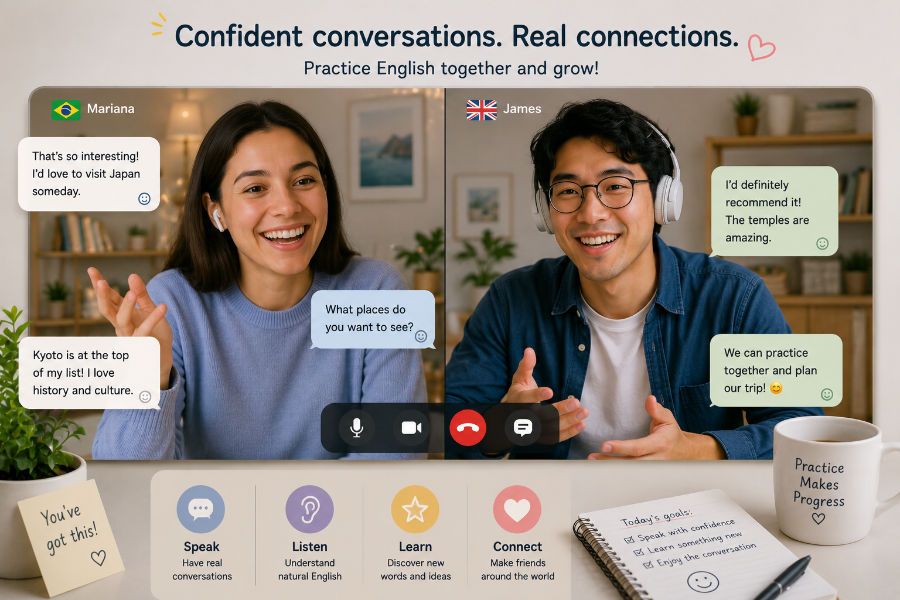
Final thoughts
Introducing yourself in English online does not need to be complicated. You do not need perfect grammar, advanced vocabulary, or a long message.
A good introduction should be simple, friendly, and clear. Include who you are, where you are from, why you are learning English, what you enjoy talking about, and what kind of practice you want.
Most importantly, end with an easy question. This gives the other person a clear reason to reply.
When you introduce yourself well, you make online language exchange easier and more natural. You also increase your chances of finding people who match your goals, interests, and communication style.
With the right introduction, your first message can become the beginning of a useful, friendly, and motivating language learning conversation.