
English Small Talk Made Easy: Topics, Questions, and Phrases That Actually Work
Small talk in English can feel difficult at first. You may know many words and understand basic questions, but when a conversation begins, you are not sure what to say next.
This is very common for English learners. You may worry about awkward silence, making mistakes, or asking questions that sound too simple.
The good news is that small talk is not about being perfect or having an exciting story ready. It is simply a friendly way to start a conversation, find common interests, and make the other person feel comfortable.
With a few useful topics, natural questions, and simple phrases, you can make English small talk feel much easier.

What is small talk?
Small talk is a short, informal conversation about everyday topics. People use it when they first meet, before a class or meeting, while waiting for something, or when talking to a new language partner online.
Small talk does not need to be deep or serious. Its purpose is to create a friendly connection.
For example, you might talk about:
- Your day
- Your weekend
- Work or study
- Hobbies
- Food
- Music, films, or series
- Travel
- Your city or country
- The weather
A simple conversation can begin like this:
“Hi! How has your day been?”
Then the other person may answer:
“It’s been good, thanks. I had a busy day at work. How about you?”
This is small talk. It is simple, natural, and easy to continue.
Why small talk is important when learning English
Many learners focus on grammar exercises, vocabulary lists, and difficult topics. These are useful, but everyday conversation is also an important skill.
Small talk helps you practice English in a relaxed way. You do not need to explain a complicated opinion or use advanced vocabulary. You only need to respond naturally and show interest in the other person.
Practicing small talk can help you:
- Feel more confident starting conversations
- Improve your listening skills
- Learn natural everyday expressions
- Speak more spontaneously
- Build better connections with language partners
- Move more easily into deeper conversations
Small talk is especially useful in language exchange. Before talking about difficult topics, it helps both people feel comfortable.
A friendly first conversation can make it much easier to practice regularly with the same person.
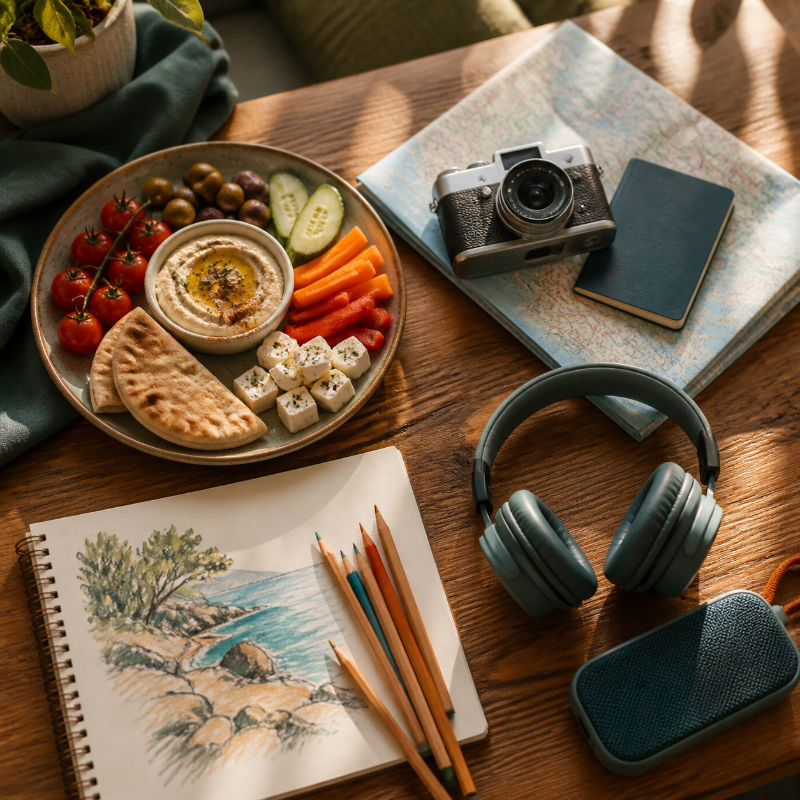
The best small-talk topics for English learners
The easiest small-talk topics are familiar, personal without being too private, and simple to answer.
Here are some reliable topics you can use with almost anyone.
1. Your day
Talking about your day is one of the easiest ways to begin. It works well because everyone can answer it.
Useful questions:
- “How has your day been?”
- “What have you been doing today?”
- “Has your day been busy?”
- “Did anything interesting happen today?”
Example:
“My day has been quite busy, but it was good. I had a lot of work to do. How was yours?”
2. Work or study
Work and study are natural topics, especially when you are getting to know someone. Keep your questions open and friendly.
Useful questions:
- “What do you do for work?”
- “What are you studying?”
- “Do you enjoy your job?”
- “What is your favourite subject?”
- “Are you working on anything interesting at the moment?”
You do not need to know much about the other person’s job. You can simply ask a follow-up question.
“That sounds interesting. What do you enjoy most about it?”
3. Hobbies and free time
Hobbies are excellent conversation topics because they often reveal shared interests.
Useful questions:
- “What do you like to do in your free time?”
- “Do you have any hobbies?”
- “What do you usually do at weekends?”
- “Have you started any new hobbies recently?”
Example:
“I enjoy cooking, listening to podcasts, and going for walks. What about you?”
4. Food
Food is a friendly topic that works especially well with people from different countries. It can lead to conversations about culture, family, travel, and daily life.
Useful questions:
- “What kind of food do you like?”
- “What is a popular dish in your country?”
- “Do you enjoy cooking?”
- “What is your favourite meal?”
- “Have you tried any interesting food recently?”
Example:
“I love Italian food, especially pasta. Is there a traditional dish from your country that you would recommend?”
5. Films, series, music, and books
Entertainment is an easy way to find common ground. It also gives you useful vocabulary and helps conversations feel more personal.
Useful questions:
- “Have you watched any good films recently?”
- “What kind of music do you listen to?”
- “Are you watching any series at the moment?”
- “Do you have a favourite singer, band, or actor?”
- “What is a film or series you would recommend?”
6. Travel and places
Travel is one of the most popular language-exchange topics. Even if you do not travel often, you can talk about places you would like to visit.
Useful questions:
- “Have you travelled anywhere recently?”
- “What is your favourite place you have visited?”
- “Where would you like to travel next?”
- “What should visitors see in your city?”
- “What do you like most about where you live?”
Useful phrases to start a conversation
Starting is often the hardest part. You do not need a very original opening. A simple and friendly question is usually enough.
Here are some natural ways to begin small talk in English:
- “Hi! How are you doing?”
- “How has your day been?”
- “How is your week going?”
- “What have you been up to today?”
- “Did you have a good weekend?”
- “How are things where you are?”
- “It’s nice to talk with you. What do you usually like to talk about?”
- “I saw that you enjoy [interest]. How did you get into that?”
When talking to a new language partner, mentioning something from their profile can make your message feel more personal.
“Hi! I saw that you enjoy travelling and photography. What is the best place you have photographed?”
This is better than sending only “Hi” because it gives the other person something clear to answer.

How to keep the conversation going
Starting a conversation is important, but continuing it is the real skill. The easiest way to do this is to ask follow-up questions.
A follow-up question shows that you listened to the other person and want to know more.
For example:
“I like hiking at the weekend.”
You could reply:
“That sounds nice. Where do you usually go hiking?”
Or:
“How long have you been interested in hiking?”
Useful follow-up phrases include:
- “Really? Tell me more about that.”
- “That sounds interesting. How did that happen?”
- “What do you like most about it?”
- “How long have you been doing that?”
- “What was that experience like?”
- “Would you recommend it?”
- “Why do you like it?”
- “What happened next?”
You can also share a little about yourself after asking a question. This keeps the conversation balanced.
“I enjoy cooking too. Recently, I tried making homemade pizza for the first time. What is your favourite thing to cook?”
Use the easy conversation formula
When you do not know what to say next, use this simple formula:
Answer + detail + question
For example, if someone asks:
“What do you usually do at weekends?”
You could say:
“I usually spend time with my friends and family. On Sundays, I often go for a walk or watch a film at home. What about you?”
A short answer is not wrong, but one extra detail makes it easier for the other person to respond.
Small-talk phrases when you need time to think
You do not need to answer immediately in perfect English. Native speakers also pause, think, and use short phrases while they decide what to say.
These phrases can help you sound more natural while giving yourself a moment:
- “That’s a good question.”
- “Let me think for a moment.”
- “Hmm, I would say...”
- “I’m not completely sure, but...”
- “That depends, actually.”
- “To be honest...”
- “I’ve never really thought about that before.”
How to change the topic naturally
Sometimes a topic ends, and that is completely normal. You do not need to panic when the conversation becomes quiet. You can simply move to a new topic.
Useful phrases for changing the topic include:
- “That reminds me...”
- “Talking about that...”
- “By the way...”
- “On a different topic...”
- “That makes me curious about something.”
- “Since we are talking about travel...”
Example:
“Talking about food, is there a dish from your country that everyone should try?”

What to avoid in English small talk
Small talk should feel relaxed, respectful, and easy for both people. Some questions can feel too personal when you have only just met someone.
It is usually better to avoid asking about:
- Money or salary
- Very personal relationships
- Religion or politics, unless the conversation naturally becomes deeper
- Health problems
- Personal appearance
- Anything that makes the other person uncomfortable
You should also avoid asking too many questions without sharing anything about yourself. A conversation should not feel like an interview.
Instead of asking question after question, try this:
“I enjoy reading too. I recently finished a mystery novel that I really liked. What kind of books do you usually read?”
This feels more natural because you are contributing to the conversation as well.
Small-talk examples for language exchange
Talking about free time:
“What do you usually like to do after work or school?”
“I usually go to the gym or watch a series. I also enjoy cooking when I have time. What about you?”
Talking about food:
“What is your favourite food from your country?”
“I would probably say feijoada. It’s a traditional Brazilian dish, and many people eat it with family at the weekend. Have you ever tried Brazilian food?”
Talking about travel:
“If I visited your city, what would you recommend doing?”
“I would recommend walking around the old town and trying some local food. It’s especially nice in the evening. Do you enjoy visiting cities or nature more?”
Talking about English practice:
“What is the most difficult part of learning English for you?”
“For me, speaking is the hardest part because I need more confidence. I understand a lot, but I sometimes forget words when I speak. What about you?”
How to practice small talk on Speak with Native
Speak with Native gives you the opportunity to practise small talk with people from different countries and language backgrounds.
When you find a language partner, begin with an easy topic from their profile. Their interests, languages, location, and learning goals can all give you ideas for a first message.
“Hi! I saw that you are learning Spanish and enjoy films. I’m learning English and I also love watching movies. What kind of films do you usually like?”
You can make your practice more useful by setting a small goal before each conversation:
- Ask three follow-up questions
- Use one new phrase naturally
- Talk about one everyday topic for five minutes
- Share one story about your week
- Ask your partner to correct one type of mistake
Small goals make conversations feel less stressful. Over time, you will notice that starting and continuing conversations becomes more automatic.
Final thoughts
English small talk does not need difficult grammar or advanced vocabulary. The most important things are being friendly, showing interest, and giving the other person an easy way to respond.
Start with familiar topics such as daily life, hobbies, food, travel, or entertainment. Ask open questions, listen carefully to the answer, and use follow-up questions to keep the conversation going.
Remember that a good conversation is not about speaking all the time. It is about sharing, listening, and helping both people feel comfortable.
The more you practise small talk, the more natural it will become. A simple question can be the beginning of a useful language exchange, a confident English conversation, or even a new friendship.